
20th century Public Health Efforts
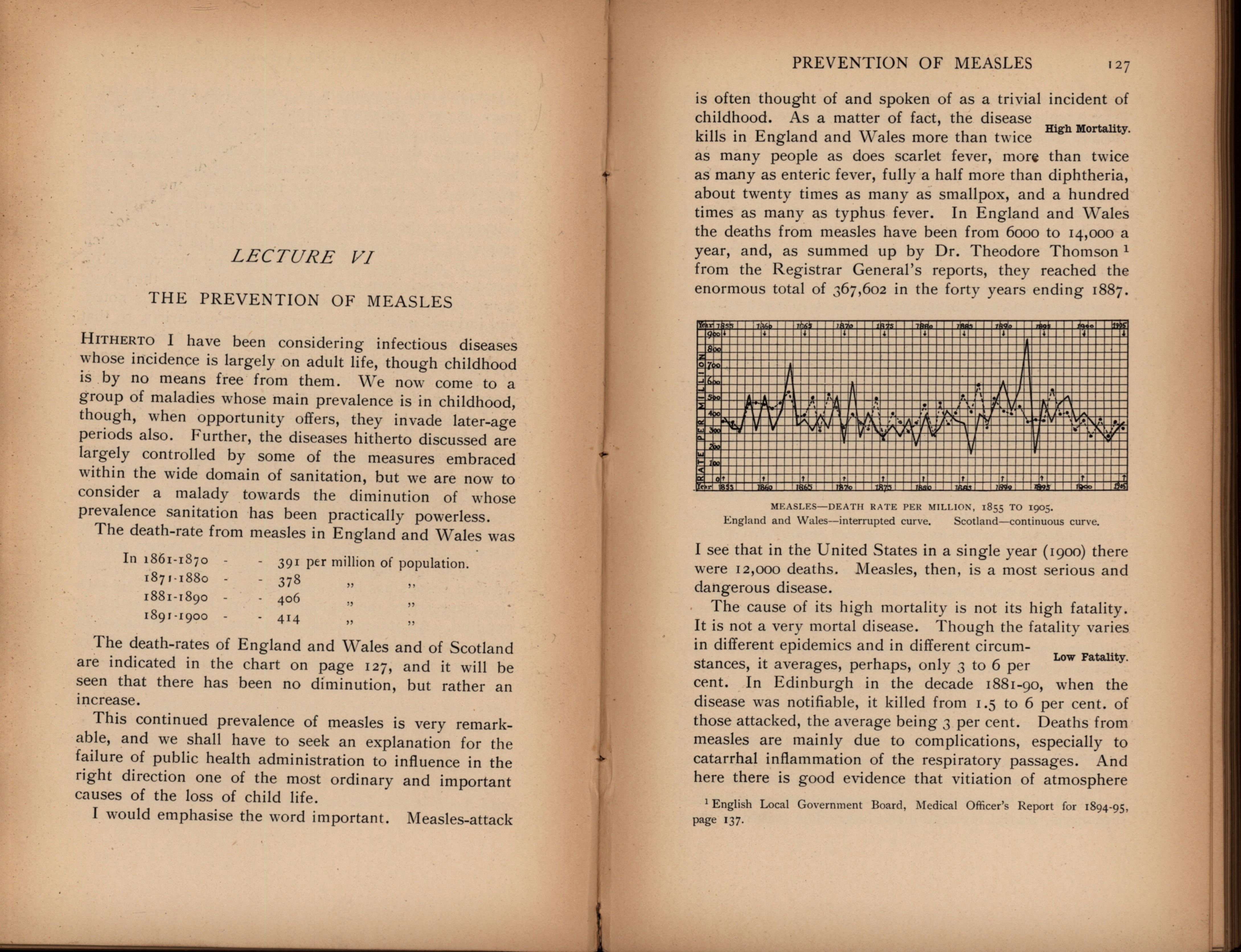
By the turn of the 20th century, physicians understood that measles was highly contagious and transmitted from person to person before the rash appears. It was very prevalent in cities because the usual public health and sanitation efforts did little to stop it. In 1907, Dr. John McVail (1849 – 1926) gave a lecture about how his county in Scotland was trying to stop the spread of the virus. At that time, measles was killing more people than scarlet fever, diphtheria, smallpox, and typhoid fever. He noted that measles didn’t have a high fatality rate, but that it was so contagious that most people contracted it, usually within a few years of birth. His data showed that it was most fatal for children under 3 years old. Considering this information, his policy tried to delay the exposure to young children. They asked schoolteachers to be on the lookout for early symptoms like red, watery eyes, and coughing. They inspected schools and encouraged closing schools or classrooms quickly when a measles case was confirmed - and keeping it closed for 15 days to stop the spread. He also recommended proper air ventilation.